
Home Loan Eligibility and Process for Pre-Launch Apartments

Buying a pre-launch apartment means booking a home before the builder gets a RERA number. This changes how your home loan works. Banks lend against a property that carries legal, RERA-backed approval, so the loan enters the picture only once that approval is in place. Your booking amount, though, goes in much earlier, straight from your own pocket. Most buyers assume the loan process starts the day they pay their token amount. It starts later, once the paperwork catches up with the launch.
What Pre-Launch Actually Means for Financing
A pre-launch or EOI stage, short for Expression of Interest, lets you reserve a unit before the project gets its RERA number. You pay this deposit from your own funds, since banks rarely lend against a project with no RERA approval yet. Once approval comes through and the builder opens formal bookings, you sign the sale agreement. That is when your home loan application really begins.
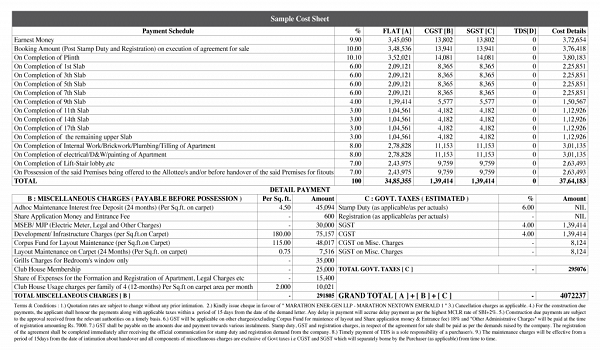
Prestige Park Ridge on Bannerghatta Road follows this exact pattern. The project sits in its EOI phase right now, with RERA approval expected around early October 2026. Its payment plan runs on a 10:10:80 structure. The first 10 percent, your booking amount, and the second 10 percent, paid at the agreement stage, come from your own savings. The remaining 80 percent gets tied to construction milestones, running through to possession in mid-2031. That final stretch is where a home loan usually steps in. This pattern is common across pre-launch luxury projects in South Bangalore, not something unique to one developer.
Home Loan Eligibility Criteria for a Pre-Launch Apartment
Lenders check you the same way they would for any home purchase. They also study the project itself before they release any money. Here is what usually decides your eligibility.
- Age: Most banks lend to salaried applicants between 21 and 60 years. Self-employed applicants can often borrow up to 65 or 70 years, depending on the lender.
- Income and job stability: A steady salary or steady business income over the last two to three years helps your case. Banks also like to see at least two years in your current job or business.
- Credit score: A CIBIL score of 750 or above improves both your approval chances and the interest rate you get offered.
- Existing loans: Your total EMI outgo, including the new loan, should generally stay under 40 to 50 percent of your monthly income. Lenders call this ratio the FOIR.
- Loan to value: Banks typically fund 75 to 90 percent of the property value. You need the rest, 10 to 25 percent, ready as your own contribution.
- Project approval status: For a pre-launch apartment, the lender checks the RERA status first. No approval, no funds, at least not against that project.
Step by Step Process for a Pre-Launch Home Loan
The sequence runs a little differently from a ready flat, mostly because of the wait for RERA. Here is how it usually plays out.
- Pay the EOI deposit using your own savings. No bank finances this early stage.
- Wait for RERA approval and the formal launch. The builder then issues your allotment letter and sale agreement.
- Apply for an in-principle sanction with your chosen bank. This gives you a clear picture of what you can borrow before you finalise anything.
- Submit your documents. This includes income proof, bank statements, identity proof, the sale agreement, and the project's RERA certificate.
- Let the bank verify the property and the builder. This step moves faster once RERA registration is confirmed.
- Receive your sanction letter. It states your approved loan amount, tenure, and interest rate.
- Get your loan disbursed in stages, matched to the construction-linked payment plan. You pay interest only on the amount released so far, not the full loan upfront.
Why RERA Approval Matters So Much Here
RERA registration protects both your money and the bank's. It confirms the builder has kept 70 percent of collected funds in a dedicated account for that project. This cuts the risk of delays eating into money meant for construction. Most banks, both government and private, will not release funds even after an in-principle sanction. They wait until the project's RERA number check out on their own list. This is exactly why pre-launch buyers pay their booking and agreement amounts from personal funds. The home loan steps in only once the legal registration catches up with the launch.
Documents You Will Typically Need
| Document Type | What It Covers |
|---|---|
| Identity and address proof | Aadhaar, PAN, passport, or voter ID |
| Income proof | Salary slips, Form 16, or ITRs for the last two to three years |
| Bank statements | Usually the last six months, showing salary or business inflows |
| Property documents | Sale agreement, allotment letter, and the project's RERA certificate |
| Employment proof | Offer letter or employment certificate for salaried applicants |
FAQs
Not usually. Banks wait for RERA registration before they release funds. Your EOI deposit and early payments come from your own savings.
Start once RERA approval is confirmed and the builder issues your sale agreement. Getting an in-principle sanction earlier still helps you plan your budget.
Most lenders fund 75 to 90 percent of the property value, depending on your profile. You need the balance ready upfront.
Yes, quite a bit. A CIBIL score of 750 or higher usually gets you a better rate and a smoother approval process.
Your loan disbursement stays on hold until the approval comes through. Banks link every disbursement stage to a verified, RERA-registered project.
In parts. Disbursement follows the construction-linked payment plan. You pay interest only on the part released at each stage, not the full sanctioned amount.